Georgia was once the frontrunner among countries aspiring to European Union integration. Twenty years ago, it was the only country in the region officially announcing its pro-European foreign policy course, declaring that Georgia wanted to become part of the EU and Nato, not only because of security guarantees, but because Europe had always been part of Georgia’s national identity and cultural belonging.
This was demonstrated at length through those years with specific democratic reforms and the transformation of the country after the Rose Revolution in 2003.
But since then, Georgia is now on a different path — one of illiberal democracy and pro-Russian sentiment.
On 9 November, Guillaume Mercier, a European Commission spokesperson, announced that Georgia would not be invited to the Enlargement Forum happening this week (15-16 November).
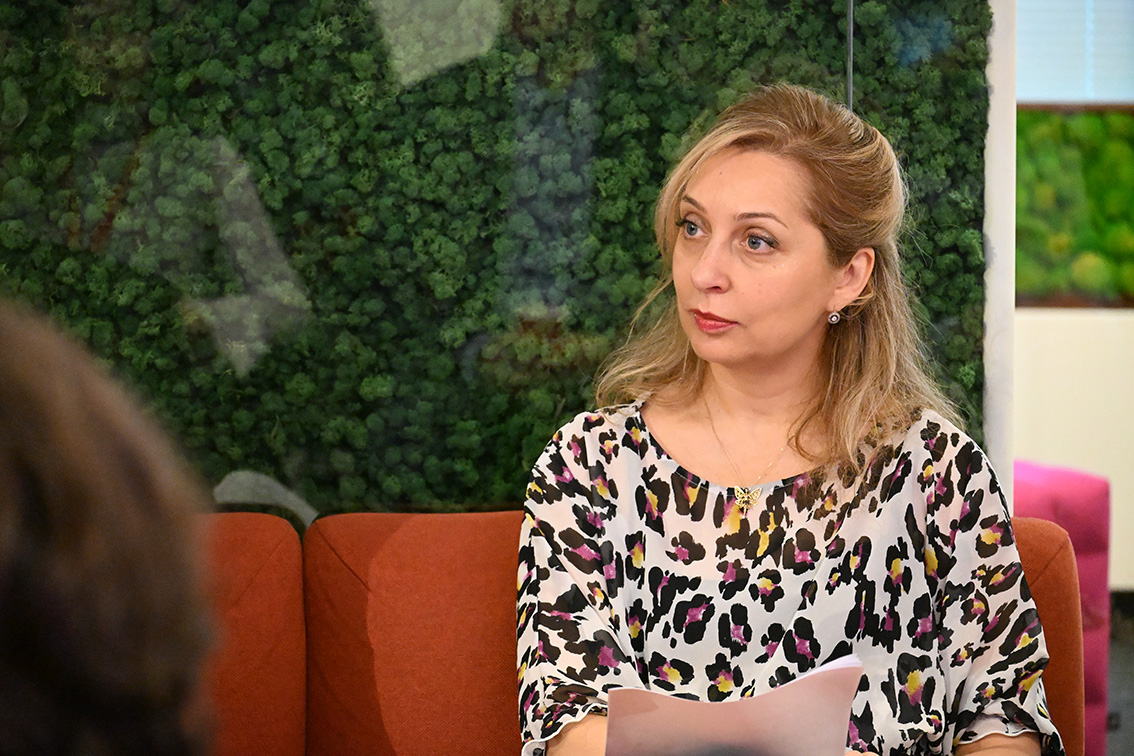
In an exclusive interview with the country’s former deputy foreign affairs minister Nino Kalandadze, we return to the biggest pivotal moments, as well as to how Georgia can be taken as a cautionary tale for the EU and its member states.
“Georgia had previously been a failed state, but it was transformed almost overnight into a beacon of democracy,” Kalandadze told EUobserver.
“There was a common understanding that democracy was a self-sustainable and self-sufficient project, and that all countries would eventually understand that democracy was what they needed to develop and thrive,” she says.
Back in 2012, in the Transparency International ranking of its Corruption Perception Index, Georgia ranked ahead of several EU member states, including the Czech Republic, Latvia, Slovakia, Romania and Bulgaria.
“We worked hard to eliminating organised crime and widespread corruption, topping international rankings, and becoming the number one reformer,” says Kalandadze.
But in 2026, Georgia illustrates how unsustainable democratic achievements can become and how easily European integration can be reversed.
Compared to where the country was 14 years ago, now “we have a ruling system that has remained in power for four consecutive years without majority support,” says Kalandadze.
That is problematic, as it has banned international funding and civil society organisations, thereby “eliminating critical media and critical voices, establishing a system of political prisoners, with leaders and activists in prison or exile, and essentially cleared the way for itself by eliminating political competition,” Kalandadze says.
And now, “we have essentially reached the final stage of autocratic consolidation,” says the former deputy foreign affair minister.
“There is no way for us to maintain the instruments we need to move closer to European integration.”
The soul is intact, the body is changing
In 2024, some 20,000 Georgian citizens took to the streets to defend European integration, their freedom, and the choice they made about the foreign policy direction Tbilisi should follow. The demonstrators back then called it “March for Europe”.
“This is still a freedom-loving and civilised society,” says Kalandadze. Indeed, “society made the effort to transform Georgia into a country that could obtain EU candidate status,” she also says.
But the political system failed.
“It is a combination of what many would call democratic naivety, but also perhaps convenience and ignorance on the part of international partners,” she says.
The “blind eye” over Russia that the EU followed are one of the reasons for Kalandadze to explain Georgia’s U-turn.
In that sense, the EU has failed at “ recognising its [Russia’s] true intentions regarding its presence in the region, particularly in Georgia,” she says.
The political force that came to power democratically in 2012 was not simply another illiberal democracy or a weakly-structured political entity. “It was an inherently non-democratic entity that had used democratic means to come to power in order to remain in power indefinitely and consolidate its authority,” says Kalandadze.
However, because of the geopolitical situation and the belief that it was better to give the new government the benefit of the doubt and extend trust to it, international partners continued to believe its pro-democracy and pro-European statements.
But domestically, the government was already behaving completely differently. “This should have been an alarming sign for many international partners,” Kalandadze says.
And in 2024, in the wake of Russia’s full invasion of Ukraine and Georgia’s elections (whose results have not been recognised by the international community), it became clear that the ruling system was never designed to be part of the European Union - but it was too late.
“The system was designed to divert Georgia from its European path and block European integration. This is where we are today.”
The government in which Kalandadze sat, from 2008-2012, has also its share of blame. “From a willingly democratic force, it gradually became increasingly illiberal,” Kalandadze says.
“However, it was an inherently democratic party and political constellation, whose aim was to join the European Union and make Georgia part of it,” she adds.
As Georgia was becoming more prosperous, more democratic and more liberal, it was setting a good example for neighbouring countries – Kyrgyzstan and Kazakhstan would invite Georgian teams to share their experience and explain how Georgia had achieved its transformation.
But this new situation was becoming a very dangerous in the region for Moscow.
“Moscow felt threatened that this transformation might spread to other neighbouring countries, eventually resulting in countries that Russia considered part of its sphere of influence moving away, as Georgia had done,” says Kalandadze.
Eventually Russia intensified its attacks against Georgia, beginning with hybrid warfare and eventually invading the country in 2008. In between, it imposed an embargo on Georgian wines, deported Georgian nationals from Moscow, and attacked Georgia's critical infrastructure.
“This was perhaps not a justification, but an explanation of the growing threat that Russia might ultimately succeed,” says Kalandadze.
And Georgia, as a post-Soviet country with a high degree of infiltration by Russian secret services, the “political elite became very cautious about introducing too many liberties”.
Indeed, too much freedom and too much democracy began to be seen as a threat to national security. This was used to justify interference in the judicial system and media freedom.
For Kalandadze, this was to moment when Georgia needed help to sustain its course. But it did not get it.
The power of the argument of peace and stability had won.
“Since then, we have had a democratically-elected political force that has never again tried to maintain its power democratically,” says Kalandadze.
Now, the Tbilisi government stays in place through propaganda. It managed to remain in power for a long time by playing a double game: pretending to remain pro-European, signing association agreements and the Deep and Comprehensive Free Trade Area agreement, sending envoys to European capitals, and reiterating its loyalty to European integration.
Domestically, however, a completely different picture was already unfolding.
For the former minister, had this been detected early enough, there would have been sufficient time for international intervention.
But after 14 years, state capture is almost complete, and “it seems there is no longer a window for intervention that could democratically change the status quo”.
People demonstrating against bad policies matter in democracies and even semi-democracies, but they do not matter to autocrats.
“Dictators do not care how many people take to the streets,” warns Kalandadze.
Indeed, autocrats disperse demonstrators and use disproportionate force, they use prisons and the justice system against political opponents and to punish their own society, they implement unconstitutional laws, such as the foreign agents law or the law on grants, to ban international assistance and essentially everything necessary to develop the conditions for democratic change.
“This is what has happened in Georgia, and Georgia has now become a warning sign for many European countries,” she says.
For the EU, the situation needs to be carefully studied to prevent Georgia's example spreading elsewhere, including within Europe, as Georgia's journey away from the EU looks to be unfixable - at least for now.
Georgia had a historic chance to become part of the European Union by 2030 and it lost it.
Kalandadze says it is “heartbreaking for people that have fought for Georgia's democracy, for its achievements, and for European integration”.
Georgia is a successful test case that can serve as an example of how easily democracy can be reversed.
“This should be a very clear warning to European countries, including EU member states,” Kalandadze also says. “The same thing could happen to them if they do not clearly state and accurately understand the situation and whom they are dealing with.”
For her, the EU needs to understand that behind these geopolitical moves are Moscow's interests, and that their objectives cannot coincide with those of Europe “because they are mutually exclusive”.
This situation of not defining and dealing with the enemy “is not only frustrating. It is very dangerous.”
While for many, European countries were taken aback, “Moscow used that time to weaken the European Union, advance its interests, and become stronger in countries like Georgia,” Kalandadze says.